How to Choose the Right Branding Agency: 7 Questions Every Business Must Ask
A good branding agency shows you how it thinks before it shows you a logo. Seven questions that separate real partners from pretty portfolios, with the answers to listen for and the red flags that should end the conversation.
To choose the right branding agency, judge how it thinks before you judge how its work looks. Shortlist three or four agencies, give each the same brief and ask them the seven questions below, on strategy, range, people, price, time, ownership and life after launch. The right agency answers with specifics, shows its reasoning, pushes back on your brief where it should, and puts the people who will actually do the work in the room.
A word on where this comes from. We are a creative branding agency in Jaipur, so we sit on the other side of this table every week. Weigh our advice with that in mind, and use every question here on us too.
1. Do you start with strategy or with design?
This question sorts agencies faster than any other. A brand identity is a set of business decisions made visible: who you serve, what you stand for and why someone should pick you. Without those decisions, design can only be judged on taste, and taste changes with whoever is in the meeting.
A good answer describes discovery before any sketching: conversations with you and your team, a hard look at your customers and competitors, and an agreed position the identity has to carry. Our own identity process runs in four stages (discover, concept, refine, deliver), and nothing is sketched until the position is agreed. Our guide on how to build a brand identity explains what that groundwork covers.
Red flag: logo concepts at the pitch, before anyone has asked about your customers. How to check: ask to see the strategy document from a past project, not just the final logo.
2. Can you show work across industries, and the thinking behind it?
A portfolio tells you two things: whether the agency can execute, and whether it has a house style it applies to everyone. You want the first without the second. If every identity in the deck could belong to one company, yours will end up looking like it too.
A good answer pairs each project with the problem it solved. When Kaleen India, a Jaipur rug maker with more than 60 years in textiles, came to us, the brief was not a missing logo. The brand felt behind the times, its digital presence was thin, it needed to stand apart from its competitors, and the work had to clear a long chain of approvals. Ask for that layer in every case study you are shown.
Sector experience helps, but range matters too: an agency that has worked across categories brings ideas your competitors have not seen. Red flag: concepts and mock-ups with no named clients. How to check: pick one project and ask what they would do differently today.
3. Who will actually do the work?
The people in the pitch are often not the people on the project. Senior partners win the business, then the work passes to juniors or hired freelancers. That can be fine, but you should know before you sign.
Ask for the names and roles of the strategist, the designer and the account lead, and how much of their time your project gets. Ask which parts are done in-house and which are outsourced, especially copywriting, photography, video and web development. Every hand-off between suppliers is a place where the brand can drift.
Red flag: “our team” with no names attached. How to check: ask to meet the lead designer before you sign, and ask them, not the founder, to walk you through one recent project.
4. What exactly is in the price, and what costs extra?
Identity work is usually priced as a fixed project fee; ongoing social media and performance marketing as a monthly retainer. Whatever the model, the quote should list the deliverables, the number of creative directions you will see, the number of feedback rounds, the file formats you receive, and whether brand guidelines, stationery, packaging and launch assets are included. Ask what an extra round of changes costs before you need one.
For reference, our complete brand identity package covers positioning and audience research, the visual identity system, tone of voice and guidelines, and we quote it to your brief after a free discovery call. Red flag: a single number with no scope, or “unlimited revisions”, which usually means unlimited guessing. How to check: ask for a sample scope of work from a past project.
5. How long will it take, and what slows projects down?
Timelines tell you whether an agency has done this before. Ours run two to three weeks for a logo, four to six for a complete identity, eight to twelve for a full rebrand, and twelve to sixteen for a new brand launch with a go-to-market plan. A quote far shorter than that for the same scope usually means the strategy stage is being skipped.
A good answer also tells you where projects stall, and it is rarely the design. It is late feedback, or a decision-maker who first sees the work at the final presentation. On the Kaleen project, a long approval chain was one of the challenges we planned around. Agree the approval points, and who signs off at each, before work starts.
Red flag: a proposal with no milestones. How to check: ask for a week-by-week plan that shows the dates on which you are expected to give feedback.
6. Who owns the brand when the project ends?
This is the question most businesses forget, and the one that hurts most later. The agency creates the artwork, so the contract has to transfer the rights in the final approved work to you.
Under Section 19 of India’s Copyright Act, 1957, an assignment of copyright is valid only if it is in writing and signed. If the assignment does not state a period, it is deemed to be five years, and if it does not state a territory, it is presumed to cover India only. So read the clause: you want the final work assigned to you in writing, worldwide, for the full term of copyright, and you want the editable source files. Have your lawyer check the wording.
Two related checks. Typefaces are licensed, not owned, so ask who holds the font licences. And before you approve a name or a logo, search existing marks on IP India’s trade mark search (opens in a new tab), or ask the agency to show you that it has. Red flag: an agency that keeps the source files and hands over flat images.
7. What happens after launch, and how will we know it worked?
A brand identity earns nothing sitting in a guidelines PDF. It pays back when it reaches your website, packaging, social feed, sales deck and storefront, consistently. Some agencies hand over files and leave; others stay to roll the brand out. Either can work, but someone has to own the roll-out, because channels that drift apart quietly waste the recognition you paid for.
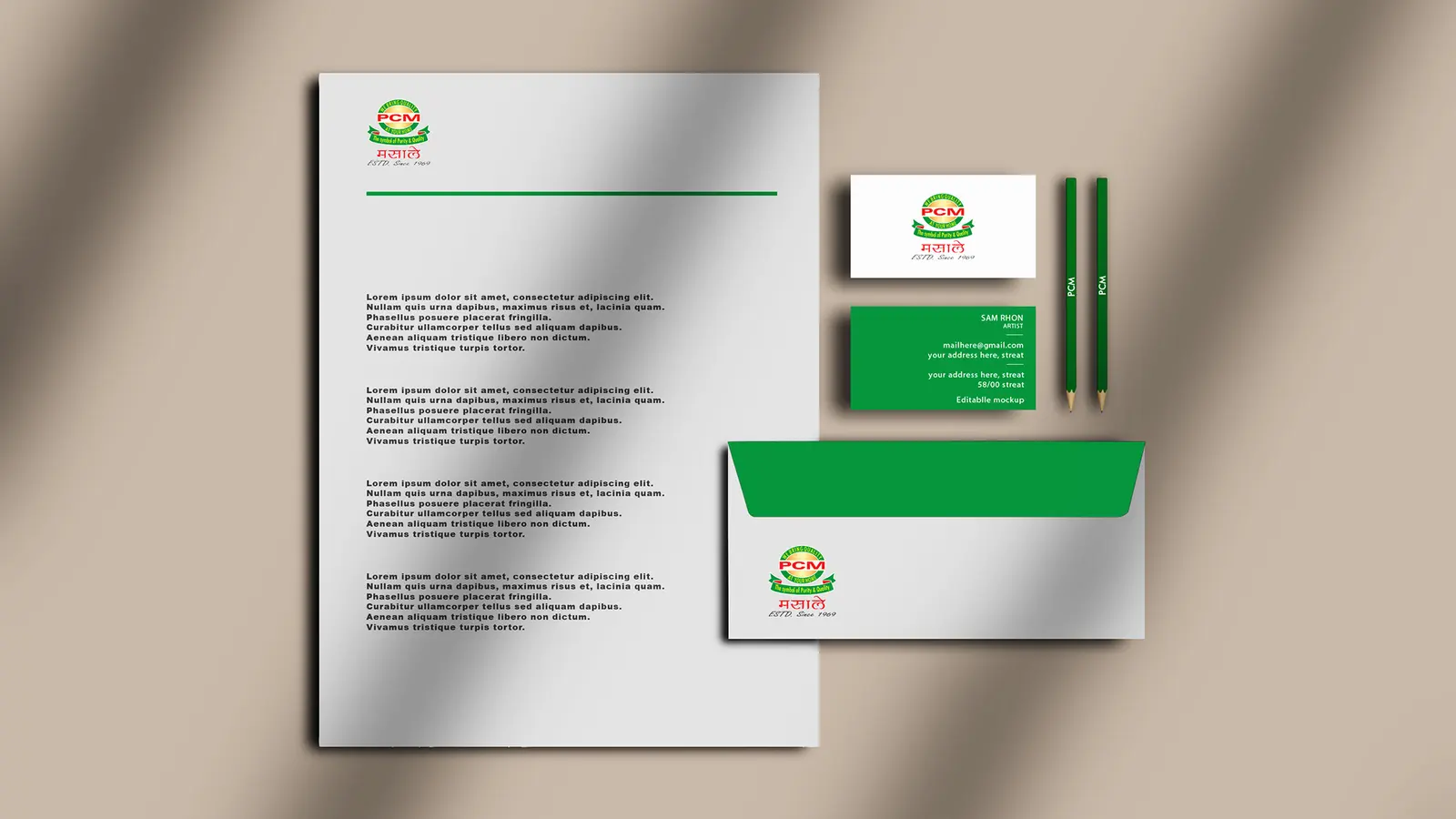
This is the strongest case for an integrated partner. PCM Masale, a Jaipur spice house of more than 45 years, chose us for its rebrand, and the work carried on into product launches, marketplace optimisation and performance marketing. In the PCM team’s words, we drive “both the strategy and the execution”. If you only need a logo, a specialist may suit you. If the brand has to show up everywhere, ask what the brand identity design connects to.
On measurement, a good agency agrees the yardsticks before it starts: searches for your brand name (visible in Google Search Console), direct enquiries, website conversion, review ratings and, for a product launch, marketplace listings. Take a baseline in week one. Red flag: success defined as “awareness” with no way to measure it.
How to make the final call
A simple way to run the decision:
- Shortlist three or four agencies whose work you respect and whose range goes beyond one style.
- Send each the same half-page brief: the problem the brand must solve, a budget range, a deadline and the one person who signs off.
- Ask all seven questions in a first meeting, and note who asked you the better questions in return.
- Speak to two past clients of each finalist about how the agency handled feedback, delays and disagreement.
- Compare the written proposals on scope, timeline, ownership and price, in that order.
- Choose the team you can be honest with. Branding means talking about the weak parts of your business, and that only works with people you trust.
Walk away if you hear any of these:
- Logo concepts before anyone has asked about your business.
- A promise to make you go viral, or guaranteed sales numbers.
- A portfolio in which every brand looks the same.
- No names for the people who will do the work.
- A contract that does not transfer ownership of the final work to you.
- Pressure to sign this week in exchange for a discount.
Not sure yet what your brand needs? Start smaller. A free brand audit of your positioning, identity, website, messaging, social media and reputation tells you what to fix first, and shows you how an agency thinks before you commit.
Questions people ask
How much does a branding agency cost in India?
It depends on scope more than on the size of your company: a logo and a complete identity with strategy and guidelines are very different jobs. We quote each project to its scope after a free discovery call. Whoever you hire, ask exactly what is included.
How long does a rebrand take?
A full rebrand takes eight to twelve weeks at our studio, and a new brand launch with a go-to-market plan twelve to sixteen. Late feedback and unclear sign-off slow a rebrand down far more than the design does.
Should I hire a freelancer, an agency or an in-house designer?
A good freelancer suits a clearly defined job, such as a logo for a business whose strategy is settled. An agency suits work that needs strategy, design, copy and roll-out together. An in-house designer is best once the brand exists and you need daily output, so many businesses use an agency to build the system and an in-house team to run it.
What should a branding agency hand over at the end?
At minimum, the logo in every format you need, the colour palette and typography, the editable source files and brand guidelines that explain how to use them. For a full identity, add positioning, tone of voice and the launch assets your team needs on day one, plus a written transfer of ownership.
Filed under Guides. Written by the strategists at PixelOMedia, Jaipur.
How your brand looks, sounds and feels.