Masala packaging design: what makes a spice pack earn trust
A masala pack sells on trust before taste. Here is how to design one that signals freshness, origin and purity in the first second on a shelf or a phone screen.
Good masala packaging design makes a buyer believe the spice inside is fresh, pure and from a place they can name, within one second of seeing the pack. Taste comes later, at home. Trust has to be won first, on a shelf or a phone screen.
This guide covers what a masala pack needs to say, how to lay it out, which materials protect the spice, and how to work through the design in order.
What is masala packaging design?
Masala packaging design is the work of shaping a spice pack's structure, material, layout, colour, type and information so that it protects the product and persuades the buyer. It covers the pouch or jar itself and everything printed on it.
For a spice brand, the second job matters more than founders expect. Most buyers cannot judge a powder through a sealed pack. They judge the pack, and the pack stands in for the spice.
Why does trust come before taste on a masala pack?
Trust comes first because the buyer cannot taste, smell or inspect the spice before paying. The pack is the only evidence they have.
Indian buyers also carry real doubts about spices: adulteration, old stock, added colour, unclear sourcing. A pack that looks careless confirms those doubts. A pack that looks careful, with clear information and clean print, answers them before the buyer asks.
What should the front of a masala pack say?
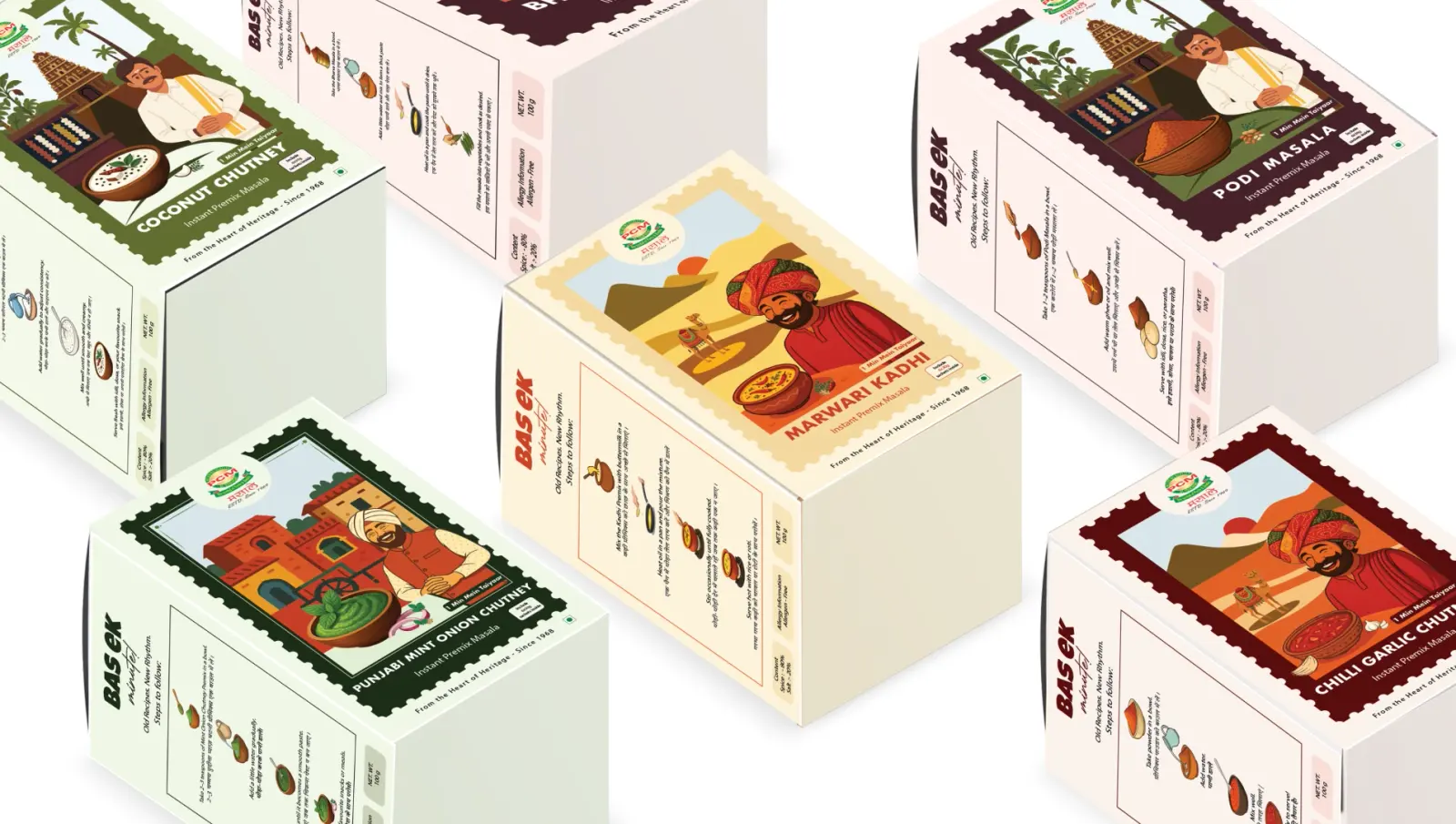
The front of a masala pack should say four things in order: the brand, the spice, the proof of quality and the quantity. Anything beyond that competes with them.
- Brand name. Large, legible and placed where the eye lands first.
- Spice name. Plain and unmissable, in the language your buyer reads, with a regional script if your market calls for it.
- Proof. One real cue such as a visible ingredient, an origin line or a purity claim you can stand behind.
- Quantity. Clear enough to read without picking the pack up.
Colour helps the buyer find the spice quickly. Red suits chilli, yellow suits turmeric, deep and warm tones suit garam masala and biryani blends. Use colour to sort your range, then keep the layout identical across it so the shelf reads as one brand.
How should spices be packaged?
Spices should be packaged in material that blocks air, moisture and light, with a seal that keeps aroma in. Aroma is what the buyer is paying for, and it fades fast in weak packaging.
Match the format to how the spice is bought. Everyday powders suit stand-up pouches with a zip. Premium blends suit jars or tins. Small trial sizes suit sachets. Ask your printer and converter about barrier layers for your specific spice, because oily blends and dry powders behave differently.
Which packaging materials suit masala?
Laminated pouches, glass jars, tin containers, paper-based cartons and plastic jars are the main options for masala, and each suits a different product and price position.
- Laminated pouch. Light, affordable and good at holding aroma, so it suits most everyday ranges.
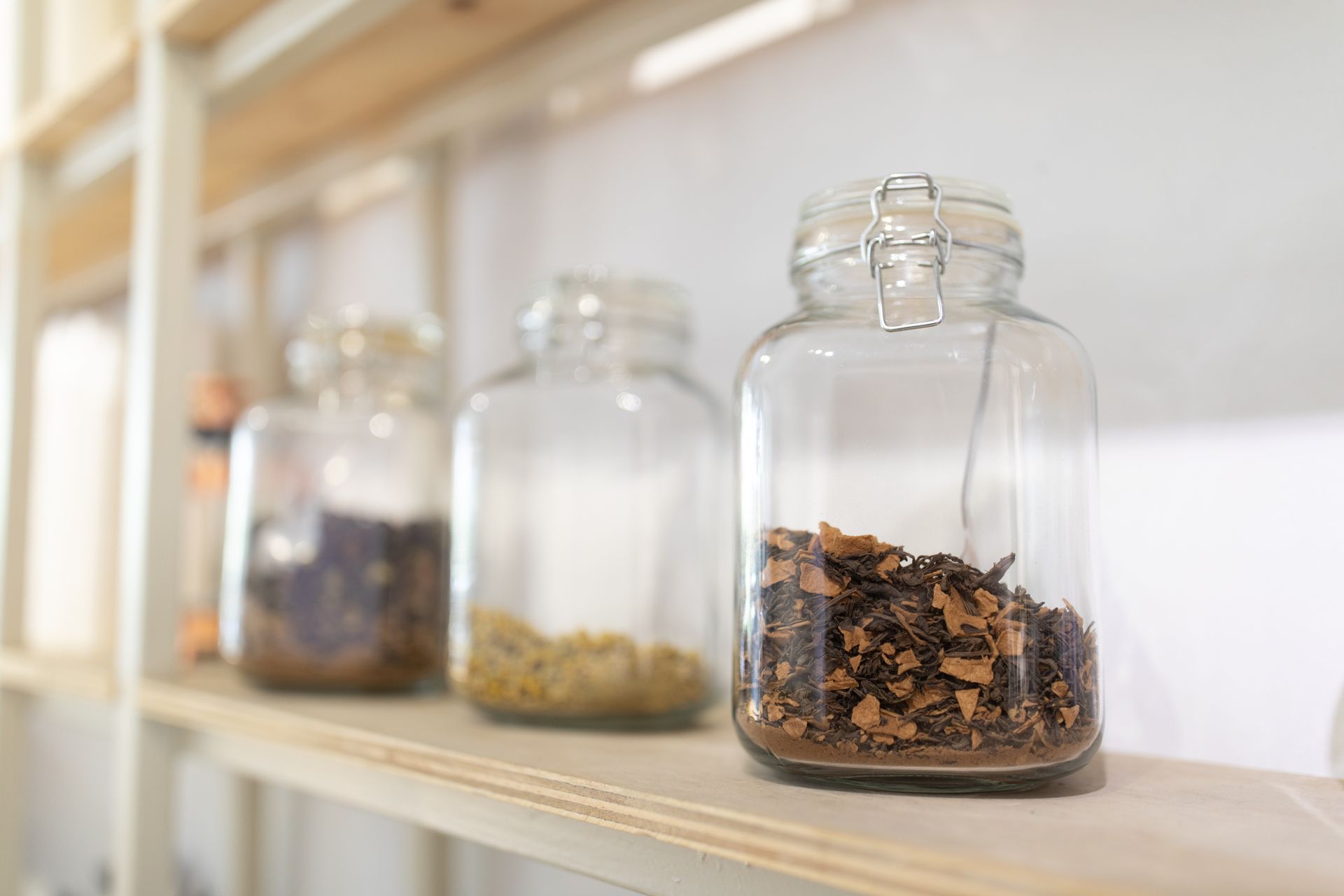
- Glass jar. Looks premium and lets the buyer see the spice, but it is heavier and costs more to ship.
- Tin. Strong light barrier and a gifting feel, suited to premium or festive packs.
- Paper carton. Works as an outer layer or for whole spices and sachet sets, usually with an inner barrier.
- Plastic jar. Practical for shelf and kitchen use, with a resealable lid.
Pick the material after you decide where the brand sits. A premium positioning in a thin, glossy pouch sends two messages that disagree.
How do you create a masala packaging design, step by step?
You create a masala packaging design by deciding what the brand stands for first, then designing the structure, the layout and the print files in that order.
- Define the position. Decide who buys your masala, what they worry about and what you promise them.
- Study the shelf. Look at where your pack will sit, both in stores and on quick-commerce and marketplace listings.
- Choose format and material. Fix the pouch, jar or tin and its barrier before any artwork.
- Build the layout. Set the hierarchy of brand, spice, proof and quantity, then the colour and type system.
- Write the back of pack. Add usage, storage, ingredients, origin and the legal information your category needs.
- Test and proof. Check the pack at thumbnail size, in poor light and as a printed sample before the full run.
A template can speed up the file setup, but it cannot decide your position. Brands that start from a template tend to look like the template. If you want the structure built around your brand, our packaging design service starts with the position, not the artwork.
How does packaging work as marketing for a spice brand?
Packaging works as marketing because it is the one piece of communication every buyer sees, at the exact moment they decide. An advert can be skipped. A pack on the shelf cannot.
For online sales, the pack is also your product photo. It has to read clearly at thumbnail size on a marketplace or quick-commerce app, where the buyer scrolls fast and compares many near-identical pouches. If your positioning is still loose, fix it before you pay for visibility, as we explain in fix your D2C positioning before you spend on ads.
What mistakes weaken a masala pack?
The most common mistake is crowding the front with claims, badges and photographs until nothing stands first. A buyer who has to search for the spice name will move on.
- Too many claims. Five badges read as noise, while one honest claim reads as confidence.
- Stock food photography. Generic images make the spice feel generic.
- Weak back of pack. Missing origin, storage or usage details leave the buyer's doubts unanswered.
- Range inconsistency. If each spice looks like a different brand, the shelf presence breaks apart.
- Design before position. Artwork that starts without a clear promise has nothing to hold it together.
If you are weighing a redesign, the broader identity matters too. Our guide to FMCG branding in India covers how a pack fits into the wider brand.
A masala pack that earns trust is clear, consistent and honest about what is inside. Decide what you promise, then let every surface of the pack say it the same way.
Questions people ask
What is the cost of packaging, and how do you calculate it?
Packaging cost is the total of design, materials, printing, conversion, filling and freight, divided by the number of packs you sell. Ask your printer for a per-pack figure at each order quantity, and add one-time costs such as plates or cylinders separately.
Is packaging cost part of the cost of sales?
Usually yes. Packaging that goes on every unit you sell is normally counted as a cost of goods sold. One-time design fees are often treated differently, so confirm the treatment with your accountant.
What are the main types of packaging?
Packaging is usually grouped as primary, secondary and tertiary. Primary is the pouch or jar that touches the spice, secondary is the carton that holds several packs, and tertiary is the shipping case or pallet wrap.
What are common food packaging materials?
Common materials include plastic films and laminates, glass, metal tins, paper and board, and moulded plastic jars. For spices, the deciding factor is how well the material blocks air, moisture and light.
Can I use a masala packaging design template?
You can use one to set up print files and check dimensions. Do not use it to decide how your brand looks, because a shared template makes your pack resemble others on the shelf.
Filed under Guides. Written by the strategists at PixelOMedia, Jaipur.
Packaging design from our Jaipur studio for FMCG, D2C and gifting brands: packs that win the shelf, the app and the unboxing.