How to Build a Brand Identity from Scratch: A Step-by-Step Guide for Startups
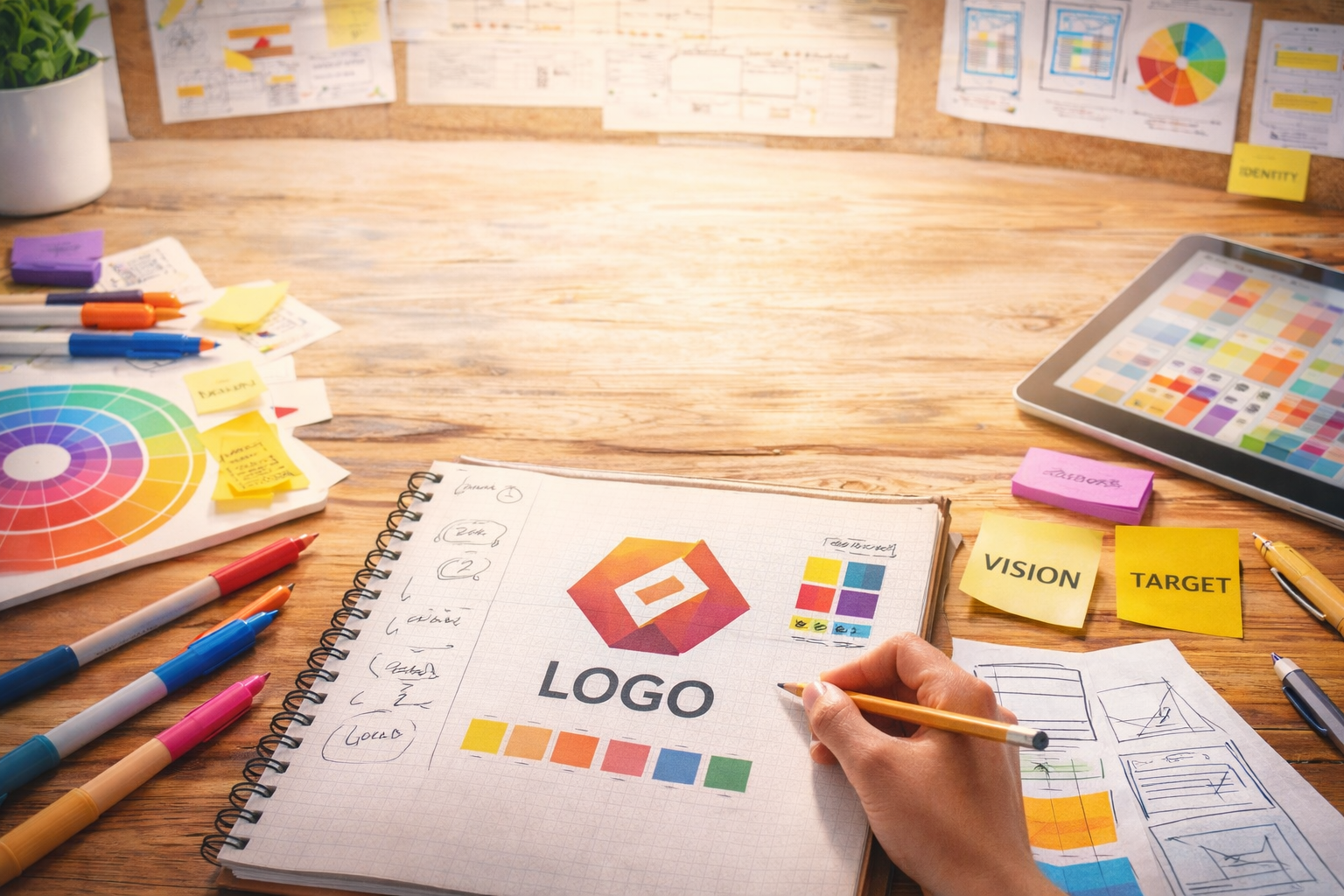
Starting a business is exciting. Building a brand is where the real work begins. A brand identity is not just your logo or your color palette — it is the complete system through which your business communicates who it is, what it stands for, and why it matters. Get it right, and everything becomes easier: marketing, sales, hiring, partnerships. Get it wrong, and no amount of advertising budget will fix the confusion.
Here is the step-by-step process we use at Pixel’O’Media to build brand identities for startups — from zero to a complete, launch-ready brand.
Step 1: Define Your Brand Foundation
Before any designer opens a tool, you need clarity on four things: your purpose (why you exist beyond profit), your values (what principles guide every decision), your target audience (who, specifically, you are speaking to), and your positioning (how you are different from alternatives in the market).
These four pillars are not marketing copy — they are the load-bearing walls of your brand. Weak foundations create inconsistent brands that confuse customers and drain marketing budgets.
💡 Pro tip: Write your brand positioning as a single sentence — ‘We help [audience] achieve [outcome] by [method], unlike [alternatives].’ If you can’t complete it, you’re not ready to design anything yet.
Step 2: Develop Your Brand Voice
Your brand voice is how you sound in every piece of communication — emails, social posts, website copy, packaging, even error messages. Is your brand authoritative or approachable? Playful or serious? Technical or conversational? Define three to four voice attributes and write examples of what they look like in practice.
Step 3: Create Your Visual Identity System
This is where most people start — and that’s the mistake. Visual identity should express a strategy, not precede one. Your visual system includes your logo (primary, secondary, and icon versions), color palette (primary, secondary, and neutral), typography system (heading and body fonts), and a set of brand patterns or graphic elements that make your design ownable.
Work with a designer who understands brand strategy, not just aesthetics. A logo that looks great in isolation but falls apart on a business card, social media banner, or mobile screen is not a finished brand identity.
Step 4: Build Your Digital Presence
In 2025, your first impression is almost always digital. Your website, your social media profiles, and your Google presence need to reflect your brand identity consistently. This means using your defined fonts, colors, and tone of voice — everywhere, every time.
Inconsistency is the fastest way to erode brand trust. If your Instagram feels playful but your website is stiff and corporate, you’re sending mixed signals to customers who are already skeptical of new brands.
Step 5: Document Everything in Brand Guidelines
Your brand guidelines are the rulebook that ensures consistency as your business grows. They should cover logo usage rules, color codes (HEX, RGB, CMYK, Pantone), typography specifications, photography style, tone of voice guidelines, and examples of correct and incorrect brand application. At POM, every brand identity we deliver comes with comprehensive guidelines. Because a brand identity without documentation is just a pretty folder of files — not a functioning brand system.



Leave a Reply